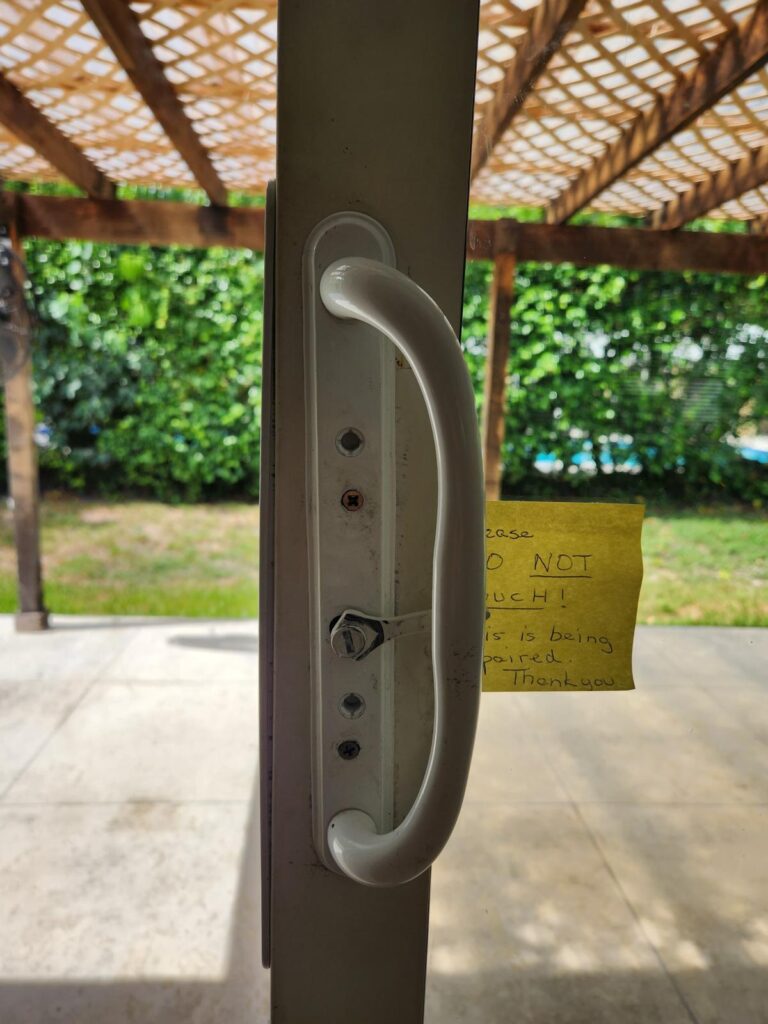
How Do You Lubricate Rollers on a Sliding Glass Door?
The right lubricant, applied the right way, can add years to your sliding door's life. The wrong one accelerates the damage. Here's exactly what South Florida homeowners need to know.
Of all the maintenance tasks a sliding glass door needs, lubrication is the one most homeowners in Pompano Beach, Fort Lauderdale, Boca Raton, Deerfield Beach, and Coral Springs either skip entirely or do wrong. Skip it, and your rollers corrode and seize years ahead of schedule. Do it wrong — with the wrong product — and you actively accelerate the damage by packing abrasive salt and sand into the roller housing every time the door slides. South Florida's coastal environment makes this maintenance task more important here than anywhere else in the country, and it changes which products actually work.
This guide covers everything: the best lubricant for sliding glass door rollers, the products that will damage your door, a clear step-by-step process, and how often to do it in Florida's climate. If your door is already grinding, stiff, or won't respond to lubrication, schedule a free same-day assessment — there's a point where the rollers need replacement, not more lubricant, and we'll tell you honestly which situation you're in.

Why Lubrication Matters More in South Florida
In a dry inland climate, sliding door rollers can go years without lubrication and still function reasonably well. In South Florida, that approach leads to premature failure every time. The combination of salt air, fine coastal sand, and near-constant humidity creates three specific problems that lubrication directly addresses:
- Salt corrosion of ball bearings — the metal bearings inside roller housings oxidize rapidly when exposed to the salt-laden air that's present year-round in communities near Pompano Beach Pier, Fort Lauderdale's A1A, and barrier island homes in Palm Beach County. A moisture-displacing, corrosion-inhibiting lubricant slows this process significantly.
- Sand and grit abrasion — fine particles from South Florida's sandy soil and coastal environment constantly infiltrate the track and roller contact surfaces. Without lubrication, these particles act as an abrasive compound that grinds away at both the roller and the track with every use.
- Thermal expansion friction — the year-round heat causes aluminum tracks and frames to expand and contract daily. A properly lubricated roller housing accommodates this movement smoothly; a dry one develops micro-friction points that compound over time into visible drag.
According to NOAA climate data, South Florida's relative humidity stays above 70% for most of the year — a level that accelerates metal corrosion at roughly twice the rate of drier climates. Regular lubrication is not optional maintenance here. It's the difference between rollers that last 8–10 years and ones that fail in 3–4.
The Best Lubricant for Sliding Glass Door Rollers
Not all lubricants are created equal — and the South Florida environment specifically rules out several products that work fine in other climates. Here's what our technicians recommend after years of service calls across Broward and Palm Beach Counties:
- Silicone spray lubricant (dry formula) — the best all-around choice for South Florida. Dries quickly, doesn't attract sand or salt, safe for nylon and stainless rollers, aluminum tracks, and rubber weatherstripping. Look for "dry silicone" on the label.
- Teflon (PTFE) spray — excellent for high-use doors. Extremely low friction coefficient, dries clean, resists moisture and salt air penetration better than most alternatives. Ideal for oceanfront homes near Pompano Beach and Fort Lauderdale's barrier island.
- White lithium grease — use only on heavy-duty steel roller bearings in larger commercial-grade doors, applied sparingly directly to the bearing. Not recommended for standard residential nylon rollers or track surfaces.
- WD-40 — the most common mistake. WD-40 is a water displacer, not a lubricant. It's petroleum-based, attracts sand and salt particles, degrades nylon roller housings, and leaves a sticky residue that becomes a dirt magnet within days in South Florida's environment.
- Cooking oil or olive oil — goes rancid quickly in South Florida's heat, attracts insects and debris, and stains flooring and door frames permanently.
- Standard motor oil or 3-in-1 oil — too heavy for roller bearings, attracts grit, leaves dark staining on tracks and thresholds.
- Petroleum jelly (Vaseline) — same petroleum base as WD-40, same dirt-attracting problems, with the added complication of a consistency that smears across flooring.
For South Florida specifically, look for silicone spray products labeled "marine grade" or "coastal formula" — these are formulated with additional corrosion inhibitors designed for salt air environments. They cost a few dollars more than standard silicone spray but last noticeably longer between applications in homes near the ocean. Available at most hardware stores along Federal Highway in Pompano Beach and at major home improvement stores throughout Broward County.
What Never to Use — The WD-40 Myth
WD-40 is the most reaching-for product in any South Florida garage, and it causes more sliding door damage than any other single factor our technicians encounter. The misunderstanding is understandable — WD-40 stands for "Water Displacement, 40th formula." It was designed to displace moisture from metal surfaces, not to provide ongoing lubrication. It does that initial job reasonably well. What it does next is the problem.
Within days of application in South Florida's environment, WD-40 residue becomes a sticky, petroleum-based film on the track and roller surfaces. Fine coastal sand and salt particles embed into this film immediately. Every time the door slides, this mixture is pushed directly into the roller bearing housing, acting as a grinding compound rather than a lubricant. Homeowners who regularly use WD-40 on their sliding doors typically call for roller replacement 2–3 years sooner than those who use silicone spray — a pattern our technicians see repeatedly in homes across Coral Springs, Deerfield Beach, and Boca Raton's Glades Road corridor.
If you've been using WD-40 on your door, clean the track thoroughly with a degreaser before switching to silicone spray — applying silicone over a WD-40 residue layer reduces its effectiveness significantly.
Step-by-Step: How to Lubricate Sliding Glass Door Rollers
Follow these steps in order. Skipping the cleaning phase and applying lubricant directly to a dirty track is the second most common lubrication mistake after using the wrong product entirely:
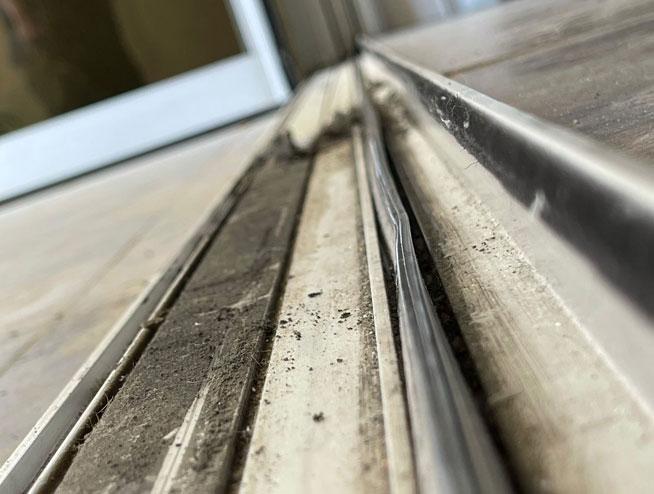
Clean the Track First
Vacuum the bottom track channel with a narrow crevice tool to remove loose sand and debris. Follow with a stiff brush — an old toothbrush works well — and a solution of warm water and mild dish soap. For salt crystal buildup common in homes near Pompano Beach Pier and Fort Lauderdale's A1A, use equal parts white vinegar and warm water. Wipe clean and allow to dry completely before proceeding.
Locate the Roller Access Points
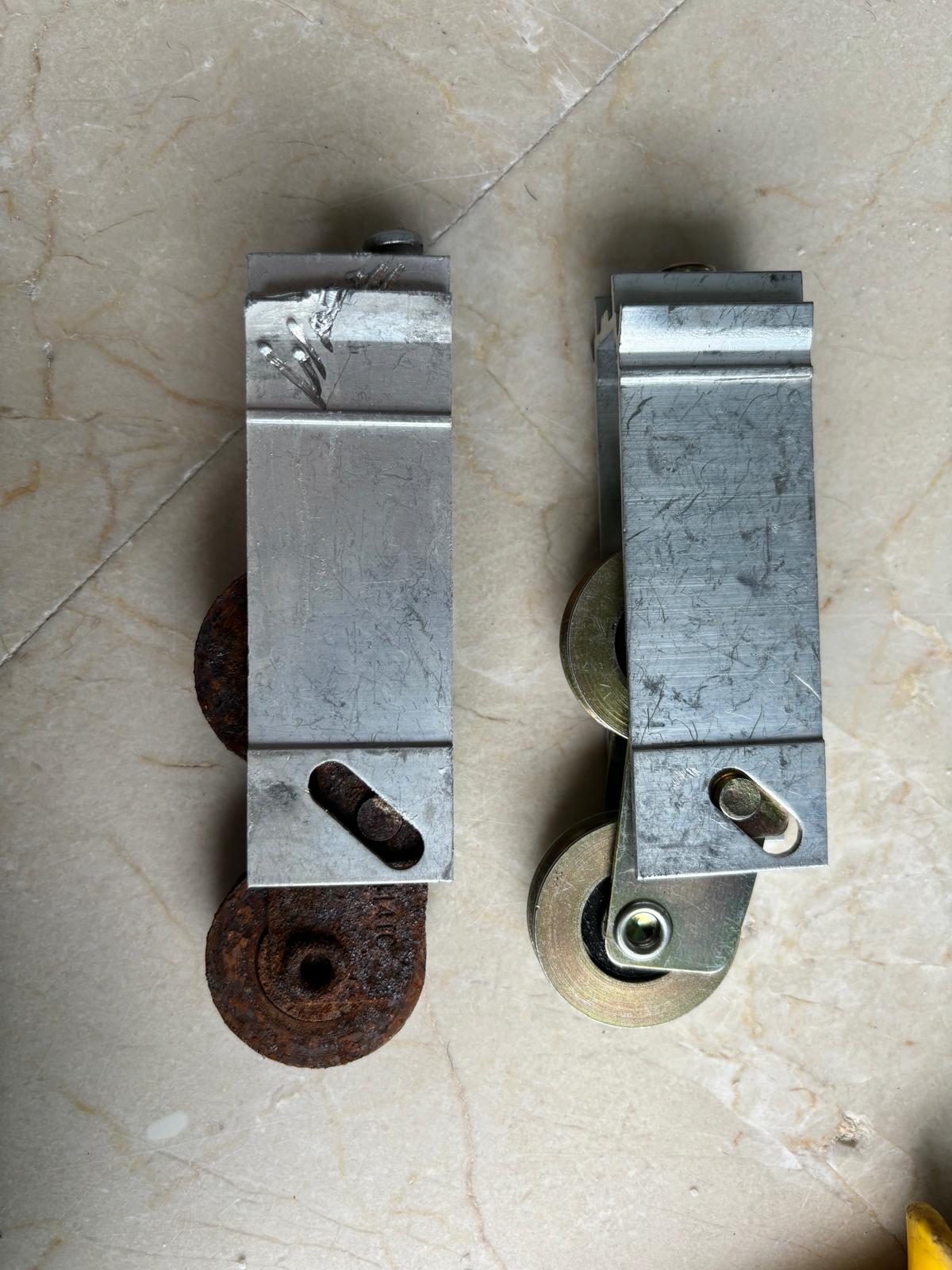
Most sliding door rollers are accessible through small holes or slots in the bottom rail of the door panel — the aluminum section at the very bottom of the glass panel. These access points allow lubricant to reach the roller housing without lifting the door off the track. On some door models, the roller housing is visible at the bottom corners of the panel.
Apply Silicone Spray to the Track
Hold the silicone spray can nozzle close to the track surface and apply a thin, even coat along the full length of the bottom track channel. Do the same for the top track if your door has one. You want a light film — not a saturated track. Too much lubricant pools and collects debris as effectively as the wrong lubricant.
Spray Into the Roller Housing Access Points
Direct the nozzle into the roller access holes at the bottom of the door panel and apply a short 1–2 second burst of silicone spray to each roller housing. This gets lubricant directly onto the bearing surface where it's needed most. Don't over-apply — a brief spray is sufficient to coat the bearing.
Work the Door Back and Forth
Slide the door through its full travel five to six times to distribute the lubricant evenly across the track surface and work it into the roller bearings. You should feel the resistance decrease progressively with each pass. After working the door, wipe up any visible excess lubricant from the track surface with a dry cloth.
Lubricate the Lock and Weatherstripping
While you have the silicone spray out, apply a light mist to the lock cylinder and latch mechanism — this prevents salt corrosion in the lock hardware. Also wipe a thin coat along the weatherstripping seals around the door frame to maintain their flexibility and prevent the cracking and compression that South Florida's UV exposure causes.
How Often Should You Lubricate in South Florida?
The national standard recommendation for sliding door lubrication is once a year. In South Florida, that schedule needs to be more frequent — particularly for homes in direct coastal exposure zones near Pompano Beach, Fort Lauderdale's A1A, and waterfront communities in Palm Beach County:
A useful anchor point: lubricate your sliding door at the beginning of hurricane season in June. The storm season brings increased humidity, wind-driven salt spray, and heavy rainfall — all of which accelerate hardware wear. Starting the season with a freshly lubricated door gives the hardware the best protection going into the months of highest stress.
If you lubricate your door and it still grinds, squeals, or requires significant force to slide, lubrication is not the fix. The roller bearings have likely corroded past the point where lubricant can restore smooth operation. At that stage, the rollers need to be replaced — not re-lubricated. Continuing to lubricate a seized roller just delays the inevitable and allows the damaged roller to grind against and damage the track. Call (877) 450-8772 for a free same-day assessment.
Door Still Stiff After Lubricating?
If lubrication didn't fix the problem, the rollers likely need replacement — not more product. Our Pompano Beach team diagnoses and repairs same day across all of Broward & Palm Beach County. Free estimates, no obligation.
What Else to Put on a Sliding Door to Make It Slide Easier
Lubrication is the most important step — but it's not the only thing that affects how easily a sliding glass door moves. Here are the other factors our technicians address when a homeowner asks what to put on a sliding door to make it slide easier:
Track Cleaning
No lubricant compensates for a track packed with sand, salt crystals, and debris. A thorough track clean using a stiff brush and mild cleaner should always precede lubrication — and in South Florida homes near Deerfield Beach's Hillsboro Inlet or Coral Springs' Wiles Road corridor where construction dust is a factor, track cleaning alone often eliminates most of the resistance before any lubricant is applied.
Roller Height Adjustment
A door panel that has dropped slightly creates contact friction against the track surface that no amount of lubricant will eliminate. Adjusting the roller height screws to raise the panel back to its correct clearance above the track restores glide immediately. This is a five-minute DIY task on most doors — see our full guide on fixing a sliding door that won't slide smoothly for step-by-step instructions.
Weatherstripping Condition
Old, hardened weatherstripping that has lost its flexibility creates friction along the door panel edges as the door slides. Replacing degraded weatherstripping — which typically needs attention every 3–5 years in South Florida's UV environment — reduces edge friction and improves the door's seal at the same time.
When Lubrication Is No Longer Enough
Lubrication is maintenance — it preserves functional hardware. It cannot restore hardware that has already failed. Here are the clear signs that your sliding door needs roller replacement rather than more lubricant:
- Grinding or crunching sound persists after fresh lubrication — the ball bearings inside the roller housing have corroded or shattered; no lubricant reaches them through the damaged housing
- The door feels the same or worse immediately after lubricating — seized rollers don't respond to surface lubrication; the bearing needs to be replaced entirely
- Visible wobble or rocking when the door is moved — a roller that has collapsed no longer provides stable support for the panel regardless of lubrication
- The door has not been lubricated in 3+ years in South Florida — at that point, the corrosion inside the bearing housing is typically advanced enough that replacement is the more reliable solution
Roller replacement in South Florida typically costs $95–$250 and is completed in a single visit. It's one of the most cost-effective repairs available — and when combined with a fresh track clean and lubrication, it restores a door to smooth, one-finger operation that lasts another 8–10 years with regular maintenance. Read our full guide on what parts of a sliding patio door can be repaired to understand the full scope of what's serviceable — and our repair cost guide to know what to budget before you call anyone.

Need a Professional Maintenance Visit?
A1 Sliding Doors offers full maintenance service — track clean, lubrication, roller inspection, and adjustment — in a single visit across Pompano Beach, Fort Lauderdale, Boca Raton, Deerfield Beach, Coral Springs, and all of South Florida.
Sources: NOAA — South Florida Climate & Humidity Data | A1 Sliding Doors — Roller Replacement | How to Fix a Sliding Door That Won't Slide Smoothly | Can a Sliding Patio Door Be Repaired? | How Much Does It Cost to Repair a Sliding Door?