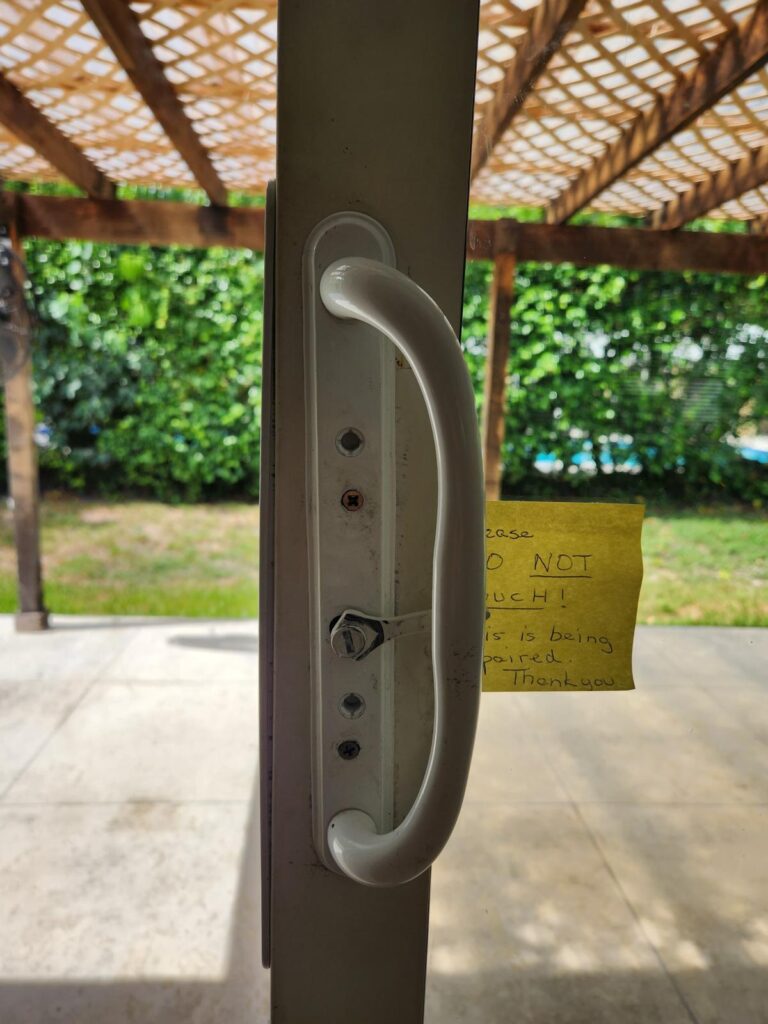
Does Homeowners Insurance Cover a Broken Sliding Glass Door?
The answer depends entirely on how it broke. Here's exactly what Florida homeowners insurance covers, what it doesn't, and how to handle a claim the right way.
When a sliding glass door gets broken — whether by a hurricane, a break-in, or an unexpected impact — the first question most homeowners in Pompano Beach, Fort Lauderdale, Boca Raton, Deerfield Beach, and Coral Springs ask is: will my homeowners insurance cover this? It's a completely reasonable question, and the honest answer is: it depends on how the door was damaged. Florida homeowners insurance covers sliding glass door damage in some situations and specifically excludes it in others — and knowing the difference before you file a claim can save you a wasted deductible and a potential rate increase.
This guide gives you a clear breakdown of what Florida homeowners policies typically cover and exclude for sliding glass door damage, the specific factors that affect coverage in South Florida's hurricane-prone environment, and exactly what steps to take if you have a covered claim. We're not insurance agents — always verify with your specific policy and insurer — but this is the practical framework our technicians see play out in real claims across Broward and Palm Beach Counties every year. And if your door needs repair or replacement regardless of the insurance outcome, schedule a free same-day estimate from A1 Sliding Doors.

The Short Answer
Yes — homeowners insurance can cover a broken sliding glass door, but only when the damage was caused by a covered peril listed in your policy. The most common covered perils for sliding door damage in Florida are hurricane and windstorm, theft or attempted break-in, and sudden accidental impact. Damage from normal wear and tear, gradual deterioration, or lack of maintenance is almost universally excluded from standard Florida homeowners policies.
- Hurricane or windstorm damage — glass shattered by wind-driven debris
- Burglary or attempted break-in — forced entry damage to glass, frame, or lock
- Sudden accidental impact — vehicle, falling tree branch, or sudden physical force
- Vandalism — intentional external damage to the door
- Fire or smoke damage affecting the door unit
- Normal wear and tear — corroded rollers, worn weatherstripping, aged hardware
- Gradual deterioration — track corrosion, frame oxidation over time
- Lack of maintenance — damage an adjuster determines resulted from neglect
- Foggy or failed glass seals — insulated glass unit failure is a maintenance issue
- Manufacturer defects — typically a product warranty matter, not an insurance claim
How Homeowners Insurance Works for Sliding Doors
A standard Florida homeowners insurance policy covers your home's structure under what's called "dwelling coverage" — typically Coverage A. Sliding glass doors are considered part of the home's structure and are covered under this section when damaged by a listed peril. The key phrase is "listed peril" — your policy specifically enumerates the causes of damage it will pay for, and anything not on that list is excluded.
Most standard Florida homeowners policies are "open peril" or "all-risk" policies for the dwelling — meaning they cover all causes of loss except those specifically excluded. The most common exclusions relevant to sliding doors are: wear and tear, gradual deterioration, neglect, and earth movement. This means that if your door was damaged by something sudden and accidental that isn't on the exclusion list, you likely have a covered claim. If it deteriorated over time — even if you didn't notice until it became a problem — you almost certainly don't.
Florida has separate hurricane deductibles from standard deductibles on most policies — typically 2–5% of the insured dwelling value rather than a flat dollar amount. On a $400,000 home, a 2% hurricane deductible means you pay the first $8,000 out of pocket before insurance kicks in. For many sliding door repairs and even full replacements, the cost falls below the hurricane deductible — meaning filing a claim may not make financial sense even when the damage is technically covered.
What Is Typically Covered in Florida
Hurricane and Windstorm Damage
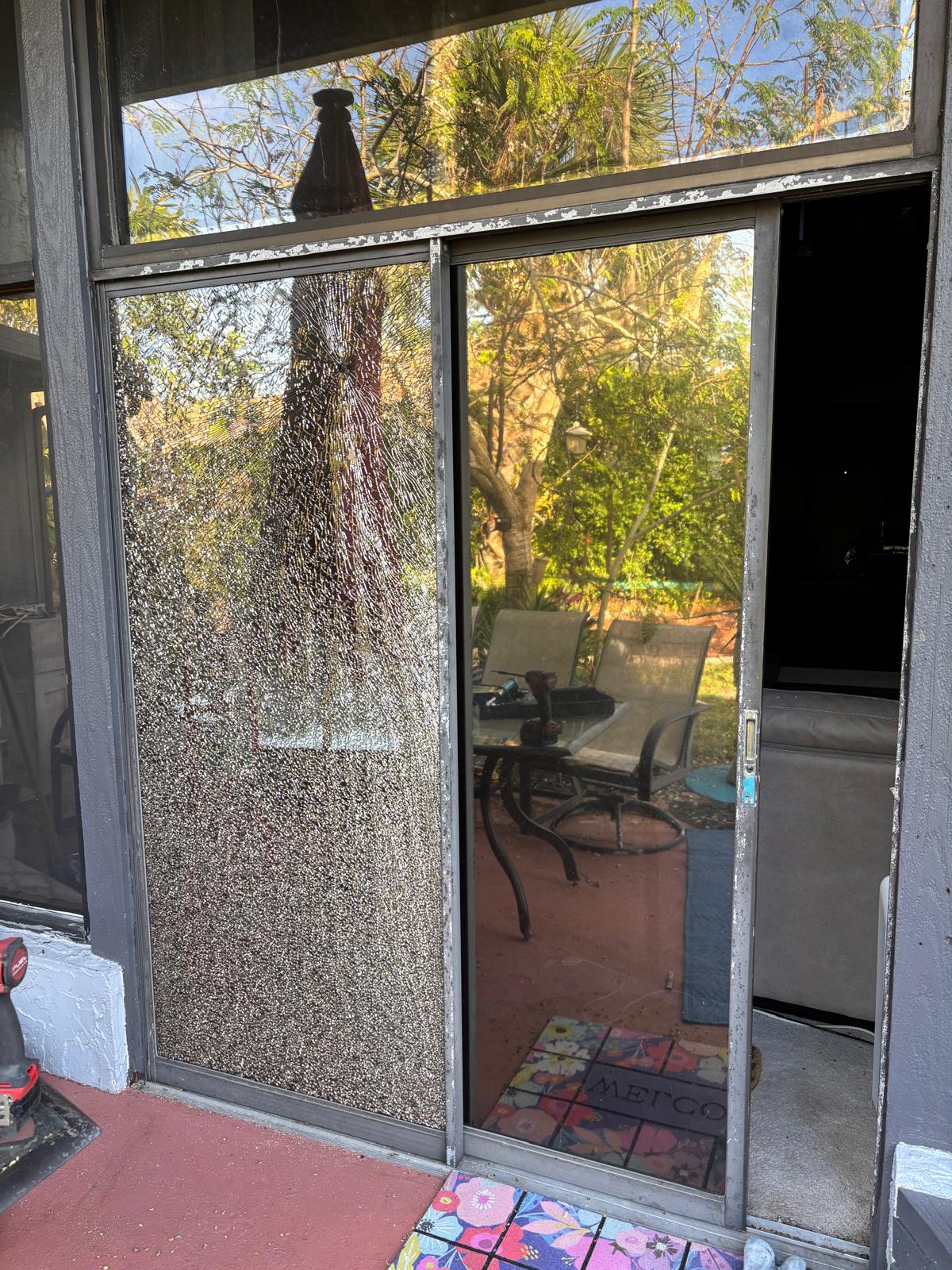
This is the most common insurance claim scenario for sliding glass doors across Broward, Palm Beach, Collier, and Lee Counties. Wind-driven debris — tree branches, roof tiles, patio furniture — shattering the glass panel or damaging the frame during a named storm or tropical system is a covered peril under virtually every Florida homeowners policy. Note that flood damage — water entering through a damaged door — may require separate flood insurance coverage depending on your policy structure.
Break-In or Attempted Burglary
A sliding glass door damaged during a break-in or attempted burglary — broken glass, a forced lock, a bent frame from pry marks — is covered under the theft or vandalism sections of most standard Florida policies. This is a particularly relevant scenario in Pompano Beach, Deerfield Beach, and Fort Lauderdale communities where backyard sliding doors are a common entry point. Document everything with photos before calling for repair, and file a police report — insurers require it for theft-related claims.
Sudden Accidental Impact
A vehicle backing into a sliding door, a large tree branch falling directly onto it, or a sudden accidental impact by a person are typically covered as sudden and accidental losses. The key word is "sudden" — the damage must have occurred in a single incident, not gradually. A door frame that has been slowly warped by vehicle vibration over years is not the same as one that was directly hit by a car.

What Is Typically Not Covered
Normal Wear and Tear
Corroded rollers, a worn-out lock latch, degraded weatherstripping, a track that has packed with debris over years — these are maintenance items, not covered perils. Florida homeowners policies explicitly exclude damage resulting from wear and tear regardless of how long the homeowner has owned the property or how unaware they were of the deteriorating condition. This is the most common reason sliding door insurance claims are denied in South Florida.
Gradual Deterioration
A frame that has slowly corroded over years in Pompano Beach's salt air environment, glass seals that failed over time creating the foggy-glass effect, or a track that gradually bent from repeated foot traffic — all of these fall under gradual deterioration and are excluded. The damage has to be sudden to be covered. Gradual is the insurance industry's word for "should have been caught and maintained."
Lack of Maintenance
This exclusion is particularly important for South Florida homeowners. If an adjuster determines that the damage — even damage caused by a storm — was worsened or made inevitable by a lack of proper maintenance, they can deny or reduce the claim under the neglect exclusion. A door with already-failed rollers that gets further damaged in a storm may receive a partial denial on the basis that the pre-existing maintenance failure contributed to the severity of the damage.
Regular maintenance of your sliding door — annual lubrication, semi-annual track cleaning, roller inspection every 5 years — is not just good for the door. It's documentation that you have not neglected the property. Homeowners who can demonstrate a maintenance history are in a stronger position when filing insurance claims for storm or impact damage. Read our guide on how to properly maintain sliding door rollers to stay ahead of the maintenance curve.
Florida-Specific Factors That Affect Coverage
Separate Hurricane Deductibles
Florida is one of the few states where most homeowners policies carry a separate, higher deductible specifically for hurricane damage. This deductible is typically calculated as a percentage of the insured dwelling value — commonly 2–5% — rather than a flat dollar amount. For many homeowners in Pompano Beach and Fort Lauderdale, this means the hurricane deductible alone exceeds the total cost of sliding door repair or even panel replacement. In those cases, paying out of pocket and preserving your claims history is the financially smarter move.
Citizens Property Insurance
A significant number of South Florida homeowners are insured through Citizens Property Insurance Corporation — Florida's state-run insurer of last resort. Citizens policies follow the same general covered/excluded framework described above, but have specific policy language around hurricane damage, opening protection requirements, and mitigation discounts. Homeowners with impact glass — including those who have upgraded via panel-only replacement — may qualify for meaningful premium discounts that offset the upgrade cost over time.
Wind Mitigation Inspections
Florida allows homeowners to receive insurance premium discounts based on wind mitigation features — including the type of glass in sliding doors. Homes with impact-rated glass panels receive better mitigation scores than those with standard tempered glass. If you've recently upgraded to impact glass through a panel-only replacement, a wind mitigation inspection update can translate those upgrades into real premium savings across Broward, Palm Beach, and Collier Counties.
Need a Repair Invoice for Your Insurance Claim?
A1 Sliding Doors provides detailed written invoices and damage assessments suitable for insurance submissions. Same-day service across all of Broward & Palm Beach County — call now.
Real Scenarios — Covered or Not?
Hurricane debris shatters your sliding door glass panel
Wind-driven debris during a named storm breaks the tempered glass. This is a covered peril under virtually every Florida policy — but check whether the damage falls below your hurricane deductible before filing.
✔ Likely CoveredYour door won't slide smoothly after years of use
Worn rollers, packed track, and corroded hardware that have degraded gradually over time. This is normal wear and tear — explicitly excluded from standard Florida homeowners policies regardless of policy type.
✗ Not CoveredSomeone tries to break in through your sliding door
Pry marks on the frame, broken glass, or a forced lock from a burglary or attempted break-in. Covered under theft and vandalism provisions — file a police report immediately and document all damage with photos.
✔ Likely CoveredYour sliding door glass is foggy between the panes
Failed insulated glass unit seal allowing moisture between the panes. This is a gradual deterioration issue — specifically excluded from standard policies. A panel replacement is needed but it's an out-of-pocket expense.
✗ Not CoveredA tree branch falls and damages your door frame during a storm
Sudden impact from falling debris during a storm. Covered as a windstorm or falling object peril — but again, check whether the total damage cost clears your deductible before filing.
✔ Likely CoveredYour door's aluminum frame has slowly corroded in the salt air
Gradual corrosion from South Florida's coastal environment over many years. Explicitly excluded as gradual deterioration and lack of maintenance under all standard Florida policies.
✗ Not CoveredA storm damaged your already-worn door worse than it would have otherwise
A door with pre-existing wear was further damaged in a covered storm event. Coverage may be partial — the insurer may attribute a portion of the damage to pre-existing neglect and only cover the incremental storm damage.
⚠ Depends on PolicyHow to File a Claim for a Broken Sliding Door
If your sliding door was damaged by a covered peril, follow these steps to give your claim the best chance of approval:
Document the Damage Immediately — Before Any Repairs
Take extensive photos and video of the damage in its original state. Photograph the damaged glass, frame, lock, and surrounding area. If wind debris caused the damage, photograph the debris in place. Never repair or clean up before documenting — insurers need to see the damage as it occurred.
File a Police Report if Applicable
For any damage related to a break-in, attempted burglary, or vandalism, file a police report immediately. Florida insurers require a police report number for theft and vandalism claims. This is non-negotiable — without it, the claim will be denied regardless of the physical evidence.
Check Your Deductible Before Filing
Calculate whether your damage estimate exceeds your deductible — particularly your hurricane deductible if a storm is involved. Filing a claim that pays out less than the deductible still creates a claims record that can affect your premium. If total repair or replacement costs are under $1,500, paying out of pocket often makes more financial sense.
Get a Written Estimate Before the Adjuster Visits
Contact A1 Sliding Doors for a free written estimate before the insurance adjuster arrives. Having an independent repair or replacement quote from a licensed local contractor gives you a benchmark to compare against the adjuster's assessment — and documentation of the scope and cost of repairs needed.
Secure the Door While the Claim Processes
A broken or non-closing sliding door is a security and weather vulnerability. If a claim is pending and you're waiting for an adjuster visit, temporary security measures — a security bar, a plywood board over broken glass, or an emergency lock repair — should be arranged immediately. A1 Sliding Doors provides 24-hour emergency service across all of South Florida for exactly these situations.
What to Do With Your Door While the Claim Processes
Insurance claims take time — sometimes weeks in the aftermath of a major storm when adjusters are handling dozens of claims across Broward and Palm Beach Counties simultaneously. In the meantime, a broken sliding glass door cannot be left unsecured. Here are the practical steps:
- Emergency glass boarding — plywood or polycarbonate sheet cut to the frame opening provides immediate weather and security protection while the claim processes
- Security bar installation — a steel security bar in the track prevents the door from being forced open even if the glass or lock is compromised
- Emergency lock repair — if the lock was damaged in a break-in, our lock repair service is available 24/7 and can restore a functional latch same day
- Temporary weatherstripping — foam tape applied to the frame gap prevents rain infiltration while waiting for permanent repair
For the full picture on what sliding door repairs and replacements cost in South Florida — useful context before talking to your insurer — see our sliding door repair cost guide. And for clarity on when repair is the right call vs. full replacement after storm or impact damage, our guide on repair vs. replace covers every scenario.
Damaged Door? We're Available 24/7.
A1 Sliding Doors provides emergency repairs, written estimates for insurance claims, and same-day service across Pompano Beach, Fort Lauderdale, Boca Raton, Deerfield Beach, Coral Springs, and all of South Florida.
Sources: Florida CFO — Homeowners Insurance Guide | Citizens Property Insurance Corporation | A1 Sliding Doors — Glass Replacement | How Much Does Sliding Door Repair Cost? | Repair or Replace a Sliding Door?