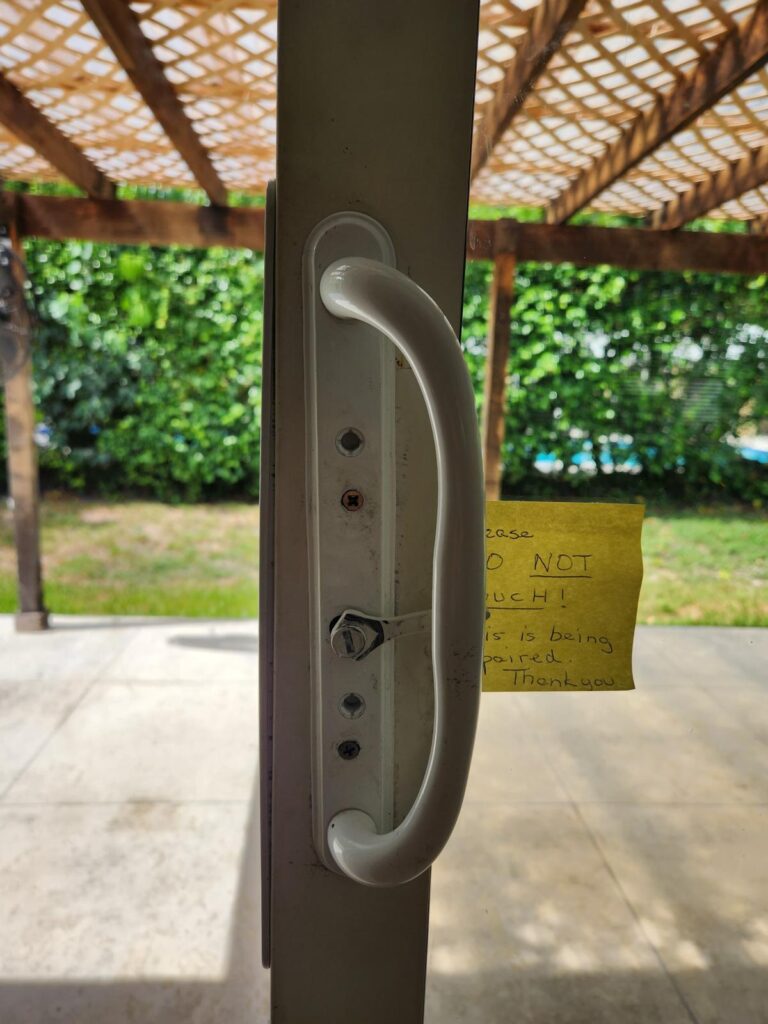
Can You Replace Rollers on Sliding Doors?
The short answer is yes — and in most cases it's the smartest, most affordable fix for a sliding glass door that grinds, drags, or barely moves. Here's everything South Florida homeowners need to know.
- Yes, You Can Replace Just the Rollers
- Signs Your Sliding Door Rollers Are Failing
- What the Roller Replacement Process Actually Involves
- How Long Does Roller Replacement Take?
- Replace the Rollers or Replace the Whole Door?
- Why South Florida Doors Wear Out Faster
- Is Roller Replacement a Permanent Fix?
- DIY vs. Calling a Technician
- Frequently Asked Questions
If your sliding glass door has turned into a daily workout — heavy to push, grinding as it moves, catching at certain spots — the first thing most homeowners assume is that the whole door needs to go. That assumption is almost always wrong, and acting on it means spending $800 to $3,000 or more on a replacement when a $75 to $200 roller swap would have solved the problem completely. In Pompano Beach, Fort Lauderdale, and across South Florida's coastal communities, rollers wear out faster than in most other parts of the country. But the repair itself is one of the most straightforward fixes in residential door maintenance.
So — can you replace rollers on a sliding door? Yes, absolutely. The rollers are a serviceable component. You do not need to replace the glass, the frame, or the track to fix worn-out rollers in most cases. This guide walks you through how to know when rollers need replacing, what the process looks like, how long it takes, and when it makes sense to call a local sliding door roller specialist rather than tackling it yourself.

Before and after a roller replacement — the difference in operation is immediate and significant.
Yes, You Can Replace Just the Rollers
Sliding glass door rollers are a fully replaceable component. They sit inside a cartridge housing at the bottom of the door panel, and that cartridge can be removed and swapped without disturbing anything else on the door. The glass stays intact. The frame stays in place. The track stays where it is. You are only replacing the small wheel-and-housing assembly that the door rides on.
This is by design. Door manufacturers know that rollers are the highest-wear part of any sliding door system. They're the only component in constant mechanical contact with the track, bearing the full weight of the door panel through thousands of open-and-close cycles every year. Building them as a replaceable cartridge means homeowners don't have to replace a perfectly good $1,500 door just because a $30 roller wore out.
The key is getting the right replacement part. Rollers are not universal — they vary by manufacturer, frame material, and door weight. If you're not sure what your door needs, our earlier guide on how to identify the right rollers for your sliding glass door covers the identification process in detail.
Signs Your Sliding Door Rollers Are Failing
Rollers don't fail overnight. The deterioration is gradual, which means most homeowners put up with a progressively worse door for months — sometimes years — before doing anything about it. Here are the signs to watch for, roughly in order of severity.
Early Warning Signs
- Slightly more resistance than usual. The door still moves but feels heavier than it used to. This is often the first sign that the ball bearings inside the roller are starting to corrode or collect grit from the track.
- A faint scraping or grinding sound. Not loud enough to be alarming, but noticeable when the house is quiet. The wheel surface is starting to wear flat or the bearing is losing its smooth rotation.
- The door needs a firm push to get started. Once moving it slides okay, but getting it going requires more force than it should. The roller is sticking at its resting position.
Mid-Stage Signs
- The door sits unevenly in the frame. One side is higher than the other, creating a visible gap at the top or bottom. This happens when one roller has worn down more than the other, changing the door's height on that side.
- The lock is hard to engage. The latch and strike plate are aligned to work at a specific door height. When the door sags due to worn rollers, the latch misses the strike plate or requires a lift to engage.
- Visible wobble when sliding. The door shimmies side to side slightly as it moves because the roller no longer sits cleanly in the track groove.
Late-Stage Signs
- Loud grinding or metal-on-metal noise. The wheel has worn through its surface material and the axle or housing is now making direct contact with the track.
- The door is nearly impossible to move. Two adults are needed to slide it, or it can only be opened a few inches. At this stage, continued forcing of the door risks bending the track.
- The door has jumped or partially derailed from the track. The roller is no longer holding the panel in proper alignment with the track channel.
Don't wait for late-stage symptoms. A door that's grinding and being forced open every day is actively damaging your track. Replacing the rollers when you notice early or mid-stage signs is always cheaper than replacing both the rollers and a bent or gouged track.
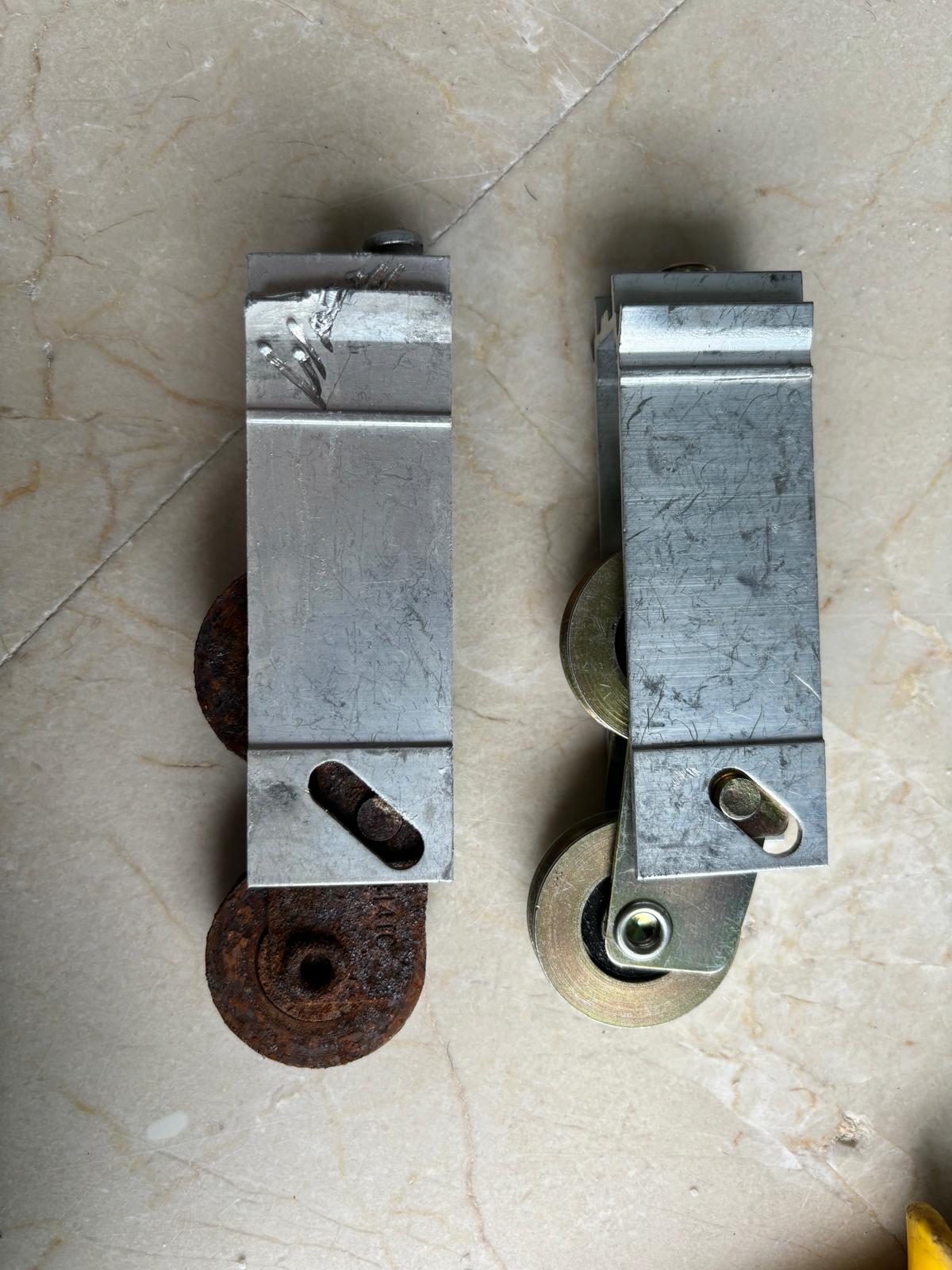
Corroded roller cartridge from a Pompano Beach home — classic salt air damage.

Fresh replacement roller — sealed bearings built for South Florida conditions.
What the Roller Replacement Process Actually Involves
Understanding the steps helps set expectations — whether you're doing it yourself or watching a technician work. Here's how a standard residential roller replacement goes from start to finish.
Step 1 — Remove the Screen Door (If Present)
Most sliding glass doors have a screen door on the exterior track. This needs to come off first to give clear access to the main door panel. Screen doors are lightweight and lift straight out of their track.
Step 2 — Access the Roller Adjustment Screws
Along the bottom rail of the door panel, there are small holes or plastic covers hiding the roller adjustment screws. A Phillips screwdriver is turned counterclockwise to retract the rollers up into the door body, lowering the panel closer to the track so it can be lifted free.
Step 3 — Remove the Door Panel from the Track
With the rollers retracted, the door panel can be tilted toward you at the bottom and lifted up and out of the track. This is the step that requires two people — a standard sliding glass door panel weighs between 80 and 200 pounds depending on glass thickness and door size. Impact glass doors are at the heavier end of that range.
Step 4 — Remove and Replace the Roller Cartridges
With the door flat on the ground or leaning safely against a wall, the roller cartridges are accessed from the bottom rail. Most are held in place by a single retaining screw. The old cartridges come out, the new matching rollers go in, and the retaining screws are tightened back down.
Step 5 — Reinstall the Door and Adjust Height
The door panel goes back into the track in reverse order — top first, then the bottom settles onto the new rollers. The adjustment screws are then turned clockwise to raise the door to the correct height, ensuring it clears the track cleanly, seals properly at the top and bottom, and aligns with the lock strike plate.
Step 6 — Test and Fine-Tune
The door is slid back and forth several times to check operation. Any height adjustment needed is made at this point. A properly installed roller set should make the door feel effortless — one finger should be enough to slide it the full width of the opening.
Never lean a removed door panel against a surface without securing it. Glass door panels are top-heavy and will fall forward if not properly supported. If the panel falls, the glass can shatter and the aluminum frame can bend, turning a simple roller job into a much more expensive repair.
Rollers Grinding? We'll Fix It Today.
Same-day sliding door roller replacement across Pompano Beach, Fort Lauderdale, Boca Raton, and all of Broward and Palm Beach County. Call now for a free estimate.
How Long Does Roller Replacement Take?
For a professional technician who does this every day, a standard single-panel sliding door roller replacement takes 30 to 60 minutes from start to finish. That includes removing the screen, taking the door off the track, swapping the roller cartridges, reinstalling the panel, and adjusting the height until the door operates perfectly.
Larger doors — particularly wide multi-panel systems or heavy impact glass doors — can take up to 90 minutes, mainly because of the extra care needed when handling heavier panels. If the track also needs cleaning or minor straightening, add another 15 to 20 minutes.
For a first-time DIY attempt, budget 2 to 3 hours. Most of that time goes toward figuring out the adjustment screws, safely handling the panel, and getting the door height dialed in properly after reinstallation. It's doable, but it's not a 20-minute job the first time around.
Replace the Rollers or Replace the Whole Door?
This is the question most homeowners ask when their sliding door starts giving them trouble. The honest answer is that if the glass is intact, the frame is straight, and the track is in reasonable shape, replacing the rollers is almost always the right call.
Replace Just the Rollers When:
- The door is hard to slide but the glass and frame are undamaged
- The door is grinding, squeaking, or sitting unevenly
- The lock won't engage cleanly but the frame itself is straight
- The door has jumped the track but nothing is visibly bent or broken
- You want to restore smooth operation without a major renovation
Consider Full Door Replacement When:
- The aluminum frame is visibly bent, warped, or corroded through
- The glass is cracked, broken, or the insulated seal has failed (foggy glass)
- The door is more than 25 to 30 years old and non-impact rated in a hurricane zone
- The track is severely bent or grooved beyond what cleaning and straightening can fix
- You're upgrading to impact-resistant glass as part of a broader home hardening project
In most cases, especially for South Florida homes built in the 1990s and 2000s with aluminum-frame doors that still have solid glass and straight frames, a roller replacement is the right repair. Full door replacement is a significant construction project — it requires permits in most Broward County municipalities and involves removing and replacing the frame in the rough opening. Roller replacement is a same-day service call with no permits, no construction mess, and immediate results.
Why South Florida Doors Wear Out Faster
If you've lived in South Florida for any length of time, you already know what the climate does to metal. Salt air, year-round humidity averaging above 75% according to NOAA climate data, intense UV exposure, and the mechanical stress of hurricane season all combine to accelerate wear on sliding door components — especially rollers.
Standard steel ball bearings corrode in salt air environments within a few years. Plastic wheel surfaces crack or flatten under sustained Florida heat. Debris and sand blown in from the coast pack into the track and grind against the roller wheel on every open-and-close cycle. Homeowners near the water — in communities along Federal Highway in Pompano Beach, near the Intracoastal in Fort Lauderdale, or in oceanfront buildings in Deerfield Beach — typically see roller failure in 5 to 10 years, compared to 15 to 20 years for inland homes in places like Coral Springs or western Boca Raton.
This is why the grade of the replacement roller matters as much as the fit. Stainless steel axles, sealed ball bearings, and UV-resistant wheel materials are not optional upgrades in this climate — they're the baseline for a repair that will actually last. A quality roller installed by a knowledgeable technician in Pompano Beach should outlast a cheap online-order part by five years or more.
Is Roller Replacement a Permanent Fix?
Yes — when done correctly with the right parts, roller replacement is a long-term repair. Quality replacement rollers installed in a properly maintained track will last 10 to 20 years under normal residential use. In South Florida's coastal environment, the high end of that range requires the right material choices (stainless axles, sealed bearings) and periodic track cleaning to keep sand and salt grit from accelerating wear.
What roller replacement is not is a patch for a broader problem. If the track is damaged, the frame is bent, or the door is being repeatedly slammed or forced past an obstruction, even the best rollers will wear prematurely. A good technician will flag any of these secondary issues during a roller replacement visit so you can address them before they shorten the life of the new rollers.
After roller replacement, clean the track every 3 to 6 months with a stiff brush and a damp cloth to remove sand and salt buildup. A light application of silicone spray lubricant on the track (not WD-40) every 6 months keeps operation smooth and reduces wear on the new rollers significantly.
DIY vs. Calling a Technician
Roller replacement is one of the more manageable DIY sliding door repairs — but it comes with real physical demands and some technical nuance that trips up first-timers. Here's how to think through the decision honestly.
DIY Is Reasonable If:
- You have a helper available to handle the door panel safely
- You've already identified the correct replacement roller (see our guide on identifying the right rollers)
- The door panel is a standard weight — not a large impact glass panel
- You're comfortable with basic hand tools and mechanical adjustments
- The track is clean and undamaged
Call a Pro If:
- The door has impact glass (heavy, expensive, and unforgiving if dropped)
- You can't confidently identify the right replacement part
- The track shows damage alongside the worn rollers
- The door has additional problems — bent frame, failed weatherstripping, misaligned lock
- You want the job done in under an hour with a warranty on the work
A professional sliding door repair technician in Pompano Beach carries the right rollers for every major door brand and can handle the full job — including any track cleaning or minor adjustments — in a single visit. For most South Florida homeowners, the combination of speed, safety, and guaranteed results makes calling a pro the better value. When you're ready to stop wrestling with a door that barely moves, get a free estimate and we'll get it sorted same day.
Ready to Replace Your Sliding Door Rollers?
Serving Pompano Beach, Fort Lauderdale, Boca Raton, Deerfield Beach, Coral Springs, and all of South Florida. Same-day service, free estimates, warranty on every job.
Frequently Asked Questions
Yes. In most cases you can replace just the rollers without replacing the glass, track, or frame. The door panel is lifted out of the track, the old roller cartridges are swapped out, and the door is reinstalled and adjusted to the correct height. It is one of the most cost-effective sliding door repairs available.
In most cases, no. The door panel needs to be lifted out of the track to access and remove the roller cartridges from the bottom rail. Some older doors have side-access designs, but the vast majority of residential sliding glass doors require panel removal for a proper roller replacement.
Watch for a door that is hard to slide, grinds or squeaks when moving, sits unevenly in the frame, or requires a lift to lock. In South Florida, salt air and humidity accelerate roller wear, so these symptoms often appear sooner than in drier climates.
A professional technician typically completes a roller replacement in 30 to 60 minutes, including panel removal, roller swap, reinstallation, and height adjustment. A first-time DIY attempt may take 2 to 3 hours depending on the door type and access.
Quality replacement rollers last 10 to 20 years under normal use. In South Florida's coastal climate, choosing stainless steel axles and sealed ball bearings extends that lifespan significantly. Roller replacement is a long-term repair, not a temporary patch.
If the glass, frame, and track are in good condition, replacing just the rollers is almost always the better choice. Full door replacement costs $800 to $3,000 or more. Roller replacement typically runs $75 to $200. Unless the frame is bent or the glass is cracked, roller replacement is the smarter investment.